
World Robot Boxing
Reliance GamesAction
4.5104.91K Reviews
- Version
- 113.113.120
- Installs
- 50.00M
- Age Rating
- Teen
Screenshots
Our Review of World Robot Boxing
 Analysis by Appyee
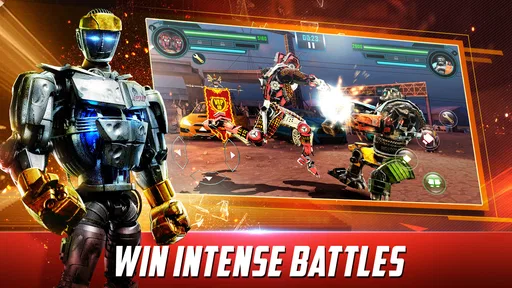
I went into World Robot Boxing expecting a quick burst of metallic punching and not much more. Instead, I found an action game that makes a strong first impression because its idea is immediately clear: choose a robot, step into an arena, and try to outthink an opponent who is just as eager to flatten you. The presentation gives each fight a satisfying sense of occasion, while the controls are approachable enough for short sessions.
That first impression is also the game’s central challenge. Robot fighting is an appealing theme, but a mobile game needs more than dramatic entrances and heavy hits to remain installed. After spending time with it, my view is fairly balanced: this is a good choice for players who enjoy compact action bouts, gradual collection, and the feeling of improving a favorite machine. It is less convincing for anyone seeking a deeply technical fighting game or a completely relaxed experience without progression pressure.
Reliance Games developed this free action title, which carries a Teen content rating and supports devices running Android 7.1 or later. It has been available since October 14, 2013, and its current version is 113.113.120. Those details matter because this is not a brand-new experiment; it is an established game that has had plenty of time to build a substantial audience and refine its identity.
What the first week feels like
I judge the first week less by how quickly I unlock things and more by whether I start recognizing an opponent’s habits. Picking one robot and making a deliberate adjustment after each loss gives those early bouts a purpose beyond novelty. That makes it easier to tell whether the game’s short-fight rhythm suits me before deciding how much time I want to give it.
Fast access to the main attraction
The best part of the opening sessions is how quickly the game communicates its rhythm. You are not asked to learn a complicated rulebook before seeing whether robot boxing suits you. Movement, attacks, defense, and timing are easy to understand at a basic level, so I could concentrate on watching the opponent rather than searching through menus.
That simplicity does not mean every fight is effortless. The useful lesson arrives when I stop treating the robot like a button-mashing machine. Throwing attacks without a plan can leave an opening, while waiting too long gives the other fighter control of the exchange. Even in short bouts, I found myself watching patterns: when an opponent tends to attack, when it leaves space, and whether I should spend the next moment defending instead of chasing damage.
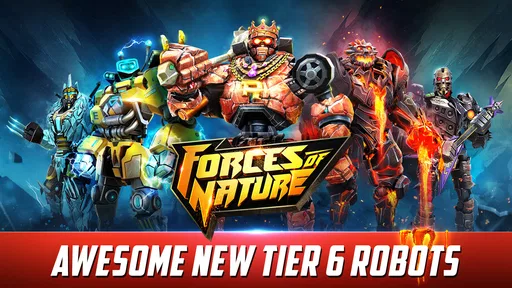
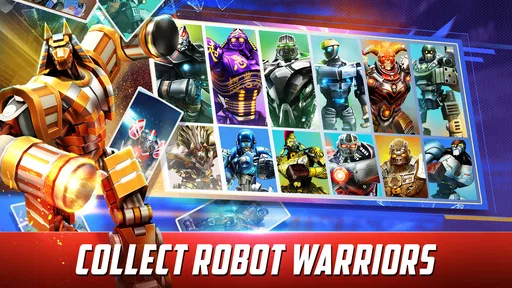
The game’s large robot roster is a major part of the early appeal. The store summary points to more than ninety machines, and that breadth gives the collection side a clear purpose. I did not need to love every design to enjoy browsing possibilities. Some robots feel like natural candidates for a first choice, while others are more interesting because they suggest a different way to approach a fight.
The first useful habit is to choose a main robot before spreading attention across the collection. New players can easily become distracted by the promise of a bigger roster, but learning how one machine handles is more valuable than constantly switching. A familiar robot makes it easier to tell whether a loss came from poor timing, a bad decision, or a genuine disadvantage in the matchup.
Why the novelty works
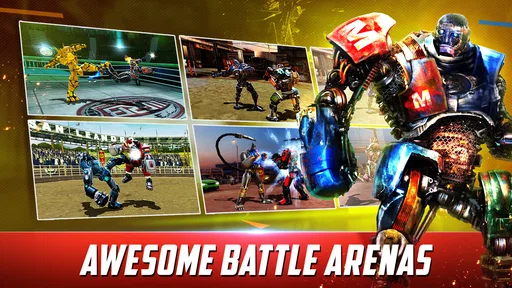
There is a pleasant feedback loop in seeing a machine become more dependable through use. A victory feels better when it follows a difficult lesson, especially after I have learned not to waste an attack at the wrong moment. The mechanical theme also helps ordinary progression feel more distinctive than it would in a conventional boxing game. Metal bodies, arena presentation, and the sense of impact give the bouts a recognizable personality.
For a realistic everyday scenario, I can easily imagine playing during a commute break or while waiting for an appointment. One or two fights are enough to create a small sense of completion, and the action does not demand that I reserve an entire evening. That makes it more convenient than many console-style fighters, which often feel better when played with a controller and uninterrupted time.
Still, the first week reveals an important boundary. If you want a pure competitive fighter where every move is built around precise frame timing and a carefully balanced roster, this is not the same kind of experience. Its appeal is broader and more accessible. It combines fighting with collection and progression, so the satisfaction comes from the whole loop rather than from technical combat alone.
Who will enjoy the opening sessions
I would recommend the early experience to players who like action games with visible goals, robot customization themes, and battles that can fit into spare minutes. It also works for people who enjoy trying several characters before deciding which one feels right. The Teen rating is worth considering for families, since the game’s combat is built around robot violence and dramatic impacts rather than a purely cartoon-free presentation.
On the other hand, I would hesitate to recommend it to someone who dislikes repeated arena fights. The basic activity remains boxing, and no amount of robot variety changes that foundation. If you need exploration, a story-heavy campaign, or a constantly changing set of activities, the first-week excitement may fade sooner than it does for a dedicated action fan.
What remains after the first month
By the end of a month, I would look for a reason to return that still feels personal: a robot I enjoy handling, a mistake I can now avoid, or a fresh approach to a familiar opponent. The collection can keep curiosity alive, but it cannot make every match feel new on its own. That longer-term test leads naturally to the practical question of how the game fits into a routine.
Progression has to earn its place
After the novelty of the machines wears off, the question becomes whether the game gives me a reason to return beyond opening another fighter. In my experience, its recurring value comes from setting small personal targets: improving with a preferred robot, testing a different style, and trying to handle a fight more efficiently than before.
That is a modest but legitimate form of replayability. I do not need every session to feel new if I can still notice improvement. A difficult opponent can become a useful training point, and a familiar arena can feel different when I change my approach. The game is strongest when I treat it as a series of short practice-and-challenge sessions rather than expecting a completely fresh experience every time I open it.
The collection of robots supports this longer rhythm, but it can also work against it. A large roster creates curiosity, yet curiosity alone is not a reason to keep playing for months. I found that the game held my attention better when I attached each new unlock or upgrade to a practical question: does this machine suit my reactions, does it cover a weakness, or do I simply want it because it looks impressive?
That distinction is useful for managing expectations. Players who enjoy collecting for its own sake may find plenty to pursue. Players who only care about having the strongest possible fighter may become less interested once their preferred path feels settled. The long-term loop is therefore personal rather than universal.
The value of short sessions
One of the game’s more durable strengths is its suitability for fragmented time. I can play a few bouts without needing to remember a complicated narrative or reconstruct a large map. That makes it a practical companion for a lunch break, a waiting room, or the final few minutes before bed, provided the player is comfortable with action rather than a calming activity.
Short sessions also make losses easier to accept. A failed bout does not necessarily ruin an evening; it can simply become a reason to try again with a different rhythm. I especially liked using a quick rematch as a test of whether I had actually learned something. If I repeated the same mistake, the problem was not the robot but my decision-making.
There is a trade-off, though. Because the sessions are compact, the game can encourage a repetitive “one more fight” habit without delivering a large new payoff each time. I recommend setting a simple stopping point, such as completing a personal training goal or playing a fixed number of bouts. That keeps the game useful as a break instead of turning it into background repetition.
How it compares with familiar alternatives
Compared with a traditional boxing game, this title is more interested in spectacle, roster variety, and mobile-friendly progression than in simulating a real sport. You are not choosing it because you want a realistic boxing career. You are choosing it because the idea of heavyweight robots trading blows is more entertaining than ordinary gloves and rings.
Compared with a pure arcade fighter, it is less about mastering a huge move list and more about making the most of a selected machine over time. That makes it easier to pick up, but players who enjoy complex combos or highly technical competitive systems may find the combat less demanding. In that situation, a dedicated fighting game would probably offer deeper long-term mastery.
Compared with other collection-driven action games, its theme gives it a clearer identity, but the same progression pressure can be noticeable. The best alternative depends on what you value: choose this one for robot combat and short bouts, a simulation for realism, or a technical fighter for precision and competitive depth. I would not call it a universal replacement for all three.
Maintenance, spending, and everyday friction
I find the healthiest routine is to treat optional purchases as a boundary to decide on calmly, not a response to a frustrating bout or a tempting locked robot. The listed item prices span from $0.99 to $299.99, so I would keep the free-to-start nature separate from any assumption that every progression goal must be bought. With that in mind, the next issue is whether everyday play stays enjoyable rather than becoming an obligation.
The game is free, but the economy deserves attention
There is no purchase price to start playing, which lowers the risk of trying it. The in-app purchase range runs from $0.99 to $299.99 per item, so the game’s free entry should not be confused with a completely cost-free progression path. I recommend deciding early whether you are willing to spend anything at all, rather than making that decision in the middle of an impatient moment.
My practical approach is to play the opening stretch without treating every locked possibility as an urgent problem. A roster-based game naturally makes new robots feel tempting, but not every attractive option is necessary for enjoyment. If progress begins to feel like a payment decision instead of a playing decision, that is a sign to step back rather than spend automatically.
This is one of the clearest long-term trade-offs. Players who enjoy gradual goals and can ignore optional purchases may find the free starting point generous enough for experimentation. Players who dislike any form of monetized acceleration may feel friction even when the fights themselves remain entertaining. For that second group, a premium game with a simpler purchase model would likely be a better fit.
Keeping the habit healthy
The maintenance burden is not about complicated upkeep in the usual sense; it is about managing attention. A game with a large robot collection can make me feel that I should constantly be checking for another improvement, another fighter, or another reason to return. That can be motivating, but it can also turn a casual pastime into a routine that feels more like a chore.
I get more value from it when I use a clear rotation. I might spend several sessions learning one robot, then switch only when I have a specific reason. This avoids the common trap of sampling everything without becoming good with anything. It also makes progress easier to notice because I am comparing my decisions against my own earlier play rather than comparing every machine at once.
Another useful rule is to stop chasing a loss immediately if frustration is rising. Robot boxing rewards attention, and tired reactions make repeated attempts less informative. A short break often tells me more than another rushed bout. This is especially relevant on a phone, where interruptions, small-screen handling, and changing surroundings can affect performance.
Device age and expectations
The minimum operating-system requirement of Android 7.1 or later makes the game accessible to many older Android devices, but compatibility is not the same as identical comfort on every phone. Action games benefit from a responsive screen and stable performance, so anyone using an older handset should judge the experience by actual control responsiveness rather than by the operating-system requirement alone.
I would also keep storage and battery habits in mind when deciding whether it deserves a permanent place on a device, although the more important question is whether I am still playing it regularly. If I only open it when the robot theme briefly catches my attention, uninstalling it until the mood returns is perfectly reasonable. A lasting game should earn its space through repeated use, not through the size of its roster alone.
Where fatigue begins
For me, fatigue starts when I queue up another fight without a goal and then make the same rushed decisions again. A small challenge—such as staying patient on defense or learning one robot more thoroughly—can restore focus, but it is fine to stop when the matches feel like repetition rather than practice. That distinction helps me decide whether a break is enough or whether I have simply reached the game’s natural limit for my tastes.
Repetition is the central weakness
The same structure that makes the game convenient can eventually make it predictable. Fights are easy to start, but the underlying activity remains a sequence of robot boxing matches. Once I understood the basic rhythm, I noticed that the excitement depended heavily on the opponent, my chosen machine, and whether I had a meaningful goal in front of me.
This does not make the game bad; it clarifies its audience. A player who enjoys refining small decisions can continue finding interest in familiar fights. A player who needs new environments, new mechanics, or story developments may feel that the game has shown most of its hand after the initial period.
The roster helps delay fatigue, but it does not eliminate it. Switching robots can refresh the experience, yet it can also make progress feel scattered. I prefer changing machines when I want to learn a different approach, not simply because the current one has become familiar. That keeps variety connected to skill rather than using it as a temporary distraction.
The tension between accessibility and depth
Easy-to-understand controls are a real advantage on mobile, but they also establish a ceiling for players who want a highly demanding fighting system. The game gives me enough room to improve timing and judgment, but I would not describe it as a specialist competitive simulator. Its design is more welcoming than intimidating, and that is both its strength and its limitation.
If you are new to action games, this accessibility is encouraging. You can focus on reading attacks and learning when to defend without first memorizing an elaborate control scheme. If you are already an expert in fighting games, you may appreciate the convenience but eventually want a system with more mechanical layers.
When I would skip it
I would skip this game if I wanted a calm, low-attention pastime, because its value depends on watching the fight and reacting at the right moment. I would also skip it if I strongly dislike in-app purchases or collection systems, since the free-to-start structure is not the same as a simple, self-contained premium experience.
It is also not my first recommendation for someone looking for a realistic boxing simulator. The robot theme is not a thin decoration; it shapes the entire appeal. If that fantasy does not interest you, the repeated matches may not provide enough compensation. In that case, a sports-focused alternative or a more technical fighter would better match the goal.
Does it deserve a permanent place?
My long-term answer is yes, but only for the right kind of player. The game has enough personality to survive the first burst of novelty, especially when I approach it as a compact action hobby built around improving with selected robots. Its established audience reflects that staying power: it has passed 50 million installs, carries a 4.5 average from around 2.3 million ratings, and has roughly 105 thousand written reviews.
Those figures do not guarantee that every player will enjoy the loop, but they do fit my impression of a game that has remained relevant beyond its original concept. It is not relying solely on the surprise of seeing robots box. The combination of short sessions, a wide collection, and accessible combat gives it a workable reason to return.
My recommendation is to begin with a focused plan: choose one robot, learn its rhythm, and judge the game by how satisfying improvement feels rather than by how quickly you can expand the roster. Keep spending optional, take breaks when matches become repetitive, and do not confuse a larger collection with a better personal experience.
For me, that is the difference between a novelty installation and a lasting mobile game. World Robot Boxing earns space when I want energetic bouts that fit around real life, not when I expect endless variety or the depth of a dedicated competitive fighter. If that balance sounds right to you, this free action game is worth trying. If it does not, the robot theme alone will probably not carry it through the long term.
Verdict
Strengths of World Robot Boxing
- Fast-paced fights are easy to learn but still offer room for skillful play.
- A wide roster of robots provides varied fighting styles and upgrade paths.
- Multiple game modes add variety beyond standard one-on-one battles.
- Special abilities and combos make matches feel dynamic and satisfying.
- Regular events and rewards give players reasons to return frequently.
Limitations of World Robot Boxing
- Energy limits can interrupt longer play sessions.
- Upgrades may require significant grinding or premium currency.
- Some opponents feel difficult without investing in stronger robots.
- The interface can feel crowded with menus, offers, and notifications.
- Online matchmaking may occasionally pair players with stronger robots.
Similar Picks in This Category
View All
Temple Run 2: Endless Escape
Imangi Studios4.1

PUBG MOBILE
Level Infinite4.3

Free Fire: 9th Anniversary
GARENA INTERNATIONAL I4.4

Talking Tom: Hero Dash Run
Outfit7 Limited4.3

slither.io
Lowtech Studios3.9

Sniper 3D:Gun Shooting Games
Wildlife Studios4.6
Frequently Asked Questions
What is World Robot Boxing?
World Robot Boxing is a fast-paced mobile fighting game in which you control powerful robots in one-on-one battles. Each machine has its own style, abilities, statistics, and upgrade potential. Matches focus on movement, blocking, dodging, punches, special attacks, and well-timed combinations. The game combines arcade-style controls with collectible and customizable robots, making it suitable for players who enjoy action games with progression systems.
Is World Robot Boxing free to download and play?
World Robot Boxing can generally be downloaded for free on supported Android and iOS devices, but it includes optional in-app purchases. These purchases may provide premium currency, robot upgrades, resources, or other progression advantages. You can play without spending money, although advancing faster or obtaining certain items may require patience. Before downloading, check the store listing for the current purchase options and device compatibility.
Does World Robot Boxing require an internet connection?
An internet connection is recommended for World Robot Boxing because several important features may depend on online access, including account synchronization, events, rewards, updates, advertisements, and competitive modes. Some parts of the game may remain accessible offline, but availability can vary after updates and between devices. A stable connection is especially important when participating in online battles, since interruptions may affect match results or progress.
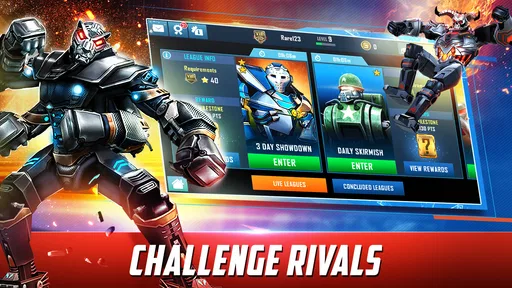
What game modes and customization options are available?
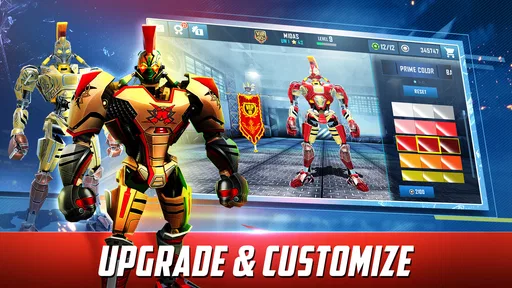
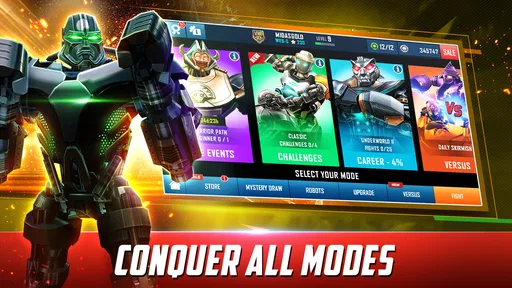
World Robot Boxing offers more than simple exhibition fights, with progression-based activities, competitive battles, challenges, and events depending on the current version. Players can collect different robots, improve their attributes, equip or develop abilities, and adapt their lineup to different opponents. The exact modes and rewards may change through updates, so regular players should check the game menus and event sections for limited-time content.
Is World Robot Boxing suitable for children and new players?
World Robot Boxing is relatively easy to start because its controls are designed for touchscreens and basic actions can be learned quickly. However, the game also includes combat, competitive progression, timers, advertisements, and optional purchases, which parents may want to review before allowing younger children to play. New players should begin with the tutorial, practice defensive movement, and avoid spending premium currency until they understand the upgrade system.
Play our best games!


